Dragon Fruit in Israel: A Field Perspective on an Unlikely Crop
Yoav Shavit, Yoav.shavit1@gmail.com, Chair of the Israeli Dragon Fruit Growers’ Table
For many, dragon fruit (pitaya) is still perceived as an exotic fruit—something associated with Southeast Asia or Central America, tasted once while traveling rather than purchased regularly at home. Yet, for more than two decades, dragon fruit has been grown commercially in Israel, quietly developing into a small but intriguing agricultural sector that sits at the intersection of climate adaptation, evolving agro-techniques, and niche-market entrepreneurship.
Although dragon fruit originates in Central America, Israel offers surprisingly suitable conditions for seasonal production. Summers are hot, but excess heat and solar radiation can be mitigated effectively using shade nets. Water availability often cited as a limiting factor in agriculture is less restrictive due to widespread desalination, making irrigation costs more manageable than in regions with similar climatic conditions, such as California. Saline soils and frost-prone regions do pose challenges, but in practice, dragon fruit can be grown across most parts of the country.
Israel’s relative success with this crop is not accidental. A crucial factor has been the early work of researchers and breeders who recognized the potential of dragon fruit. The establishment of dragon fruit cultivation in Israel is largely attributed to the pioneering work of Professor Yossi Mizrahi (mizrahi@bgu.ac.il), who played a central role in introducing genetic material and adapting varieties to local conditions. His work combined scientific rigor with entrepreneurial thinking and laid the foundation for the industry as it exists today.
Despite its vigorous growth and high yield potential, dragon fruit is far from a “quick win” crop. A common assumption is that growers earn exceptionally high profits due to the fruit’s high retail price. In reality, the economics are far more complex. Establishing a plantation under shade nets requires very high upfront investment often hundreds of thousands of shekels before the first commercial harvest without accounting for labor costs. Ongoing maintenance of both plants and infrastructure is intensive and continuous, making profit margins far more fragile than they appear from the consumer’s perspective.
Several practical aspects of cultivation are also poorly documented. One example is trellising. Images from countries such as Vietnam or China often show dragon fruit grown on a single vertical post, with branches cascading outward. In Israel, most growers use a system similar to grapevine trellising, with horizontal cables supporting plant growth (Fig.1). To date, it has not been conclusively demonstrated whether one system is agronomically superior under local conditions, and this remains an open question.
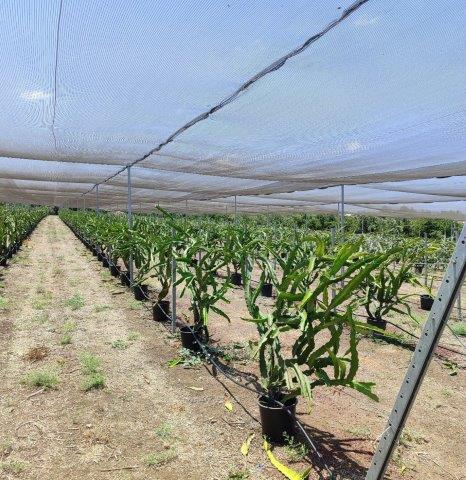
Figure 1 – The Trellising system similar to that used in grapevines
Perhaps the most distinctive agronomic feature of dragon fruit cultivation is pollination. A large proportion of pitaya cultivars are self-incompatible, meaning that self-pollination is ineffective or results in poor fruit set. Successful fertilization therefore requires cross-pollination between compatible varieties, making orchard design, varietal composition, and flowering synchronization critical management considerations.
Beyond the biological constraint, pollination presents a unique operational challenge. Flowering occurs at night, and each flower remains receptive for only a short time window, typically closing by late morning. During the flowering season, growers wake up before sunrise each day to collect pollen from different varieties, before natural pollinators become active (Fig.2). Pollen is harvested from the anthers, filtered, and stored in small containers to allow precise control over the genetic source used for pollination.
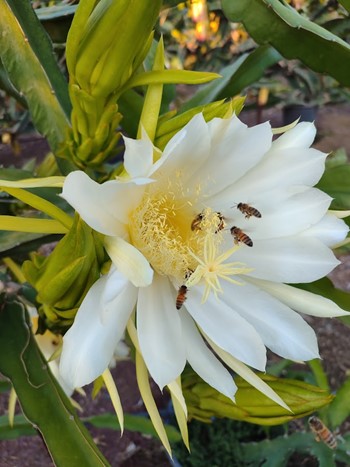
Figure 2- Pollen must be collected before the bees arrive
While dragon fruit flowers attract bees, natural pollination is largely ineffective under commercial conditions. The flowers are exceptionally large and produce abundant pollen, which tends to saturate visiting insects quickly. As a result, bees do not move efficiently between flowers or between varieties, nor can they pollinate the thousands of flowers that may open simultaneously within the narrow viable time window. This biological and temporal mismatch makes reliance on natural pollinators impractical at scale.
Pollination is therefore performed entirely by hand one of the most distinctive aspects of this crop. Using a small brush, pollen is applied directly to the stigma of each individual flower. This process is repeated flower by flower, often thousands or tens of thousands of times during a single morning (Fig.3). Timing is critical: pollination must be completed early, before flowers close and before environmental conditions reduce pollen viability.
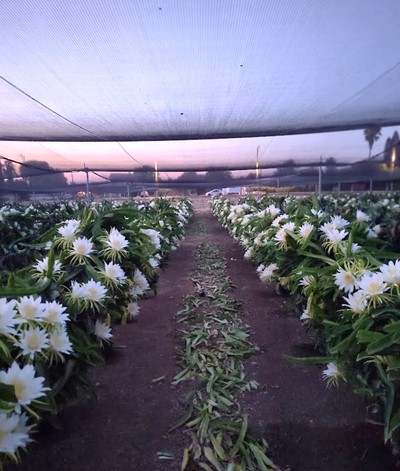
Figure 3- Tens of thousands of flowers to be pollinated by hand in a few hours timespan
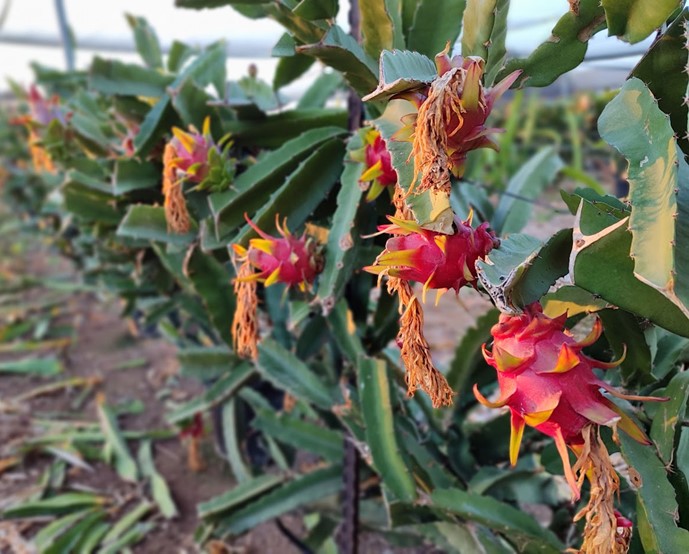
Harvest places additional constraints on production. Once a fruit turns red, the time window for picking is very narrow particularly during the hot Israeli summer (Fig.4) and delayed harvesting quickly leads to wrinkling and loss of visual quality, which directly affects marketability. Pollination typically begins around mid-June, followed by an intensive period of harvesting and packing from mid- to late July through March. The pronounced seasonality of these operations, combined with the sector’s reliance on foreign labor, requires careful workforce planning and often necessitates the integration of additional crops or activities to maintain year-round employment.
From a research and ag-tech perspective, most Israeli work has focused on breeding, with far less attention given to automation or robotics. This is largely a matter of scale. Consequently, data collection and sensor-based decision-making are often implemented independently by growers. On our farm, we continuously monitor temperature and humidity to better understand flowering behavior, disease pressure, and water use.
Almost all dragon fruit grown in Israel is destined for the local market. Shelf life is relatively short, and export trials have so far proven commercially unviable.
In summary, dragon fruit in Israel represents a specialized agricultural system rather than a mainstream crop. Its development depends on coordinated agronomy, labor management, and market planning, making it suitable primarily for tough growers willing to invest in long-term production and niche-market strategies.